How to Choose a Direct Drive Wheel Base (2026 Buyer's Guide)
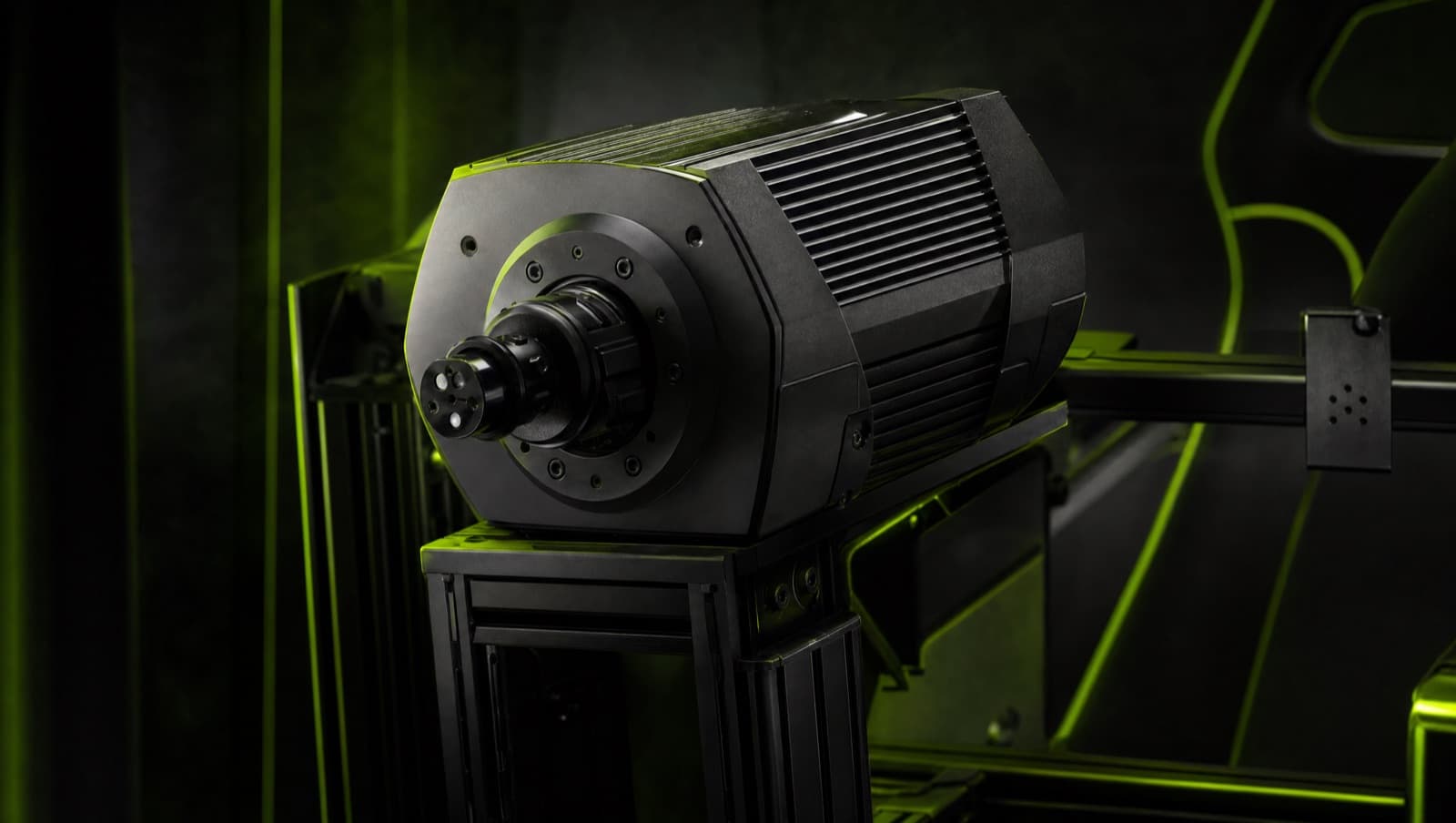
Direct drive is the single biggest upgrade in sim racing — the motor connects straight to your wheel with no belts or gears, so every kerb, slide, and weight shift lands in your hands instantly. But more torque isn't automatically better. This guide helps you pick the right base without overspending.
TL;DR — the 30-second answer
What direct drive actually is (and why it matters)
In gear- and belt-driven wheels, the motor's force reaches your hands through a transmission — and every gear mesh and belt stretch smears the signal. Direct drive bolts the wheel straight onto the motor shaft: zero slack, zero smoothing.
The practical result: you feel the front tyres load into a corner, the exact moment grip breaks away in a slide, and the kerb texture under each wheel — information you use to catch the car instead of reacting too late. That is why direct drive is the single biggest feel upgrade in sim racing.
Step 1 — Decide where it will be mounted
This decision comes before torque, because your mounting limits your safe torque ceiling:
- 01Desk with a clamp: safe up to ~9 Nm. Above that, strong bases can flex the desktop, walk the clamp loose mid-corner, or literally lift a light desk. If you're staying on a desk, a 5.5–9 Nm base is the honest ceiling.
- 02Wheel stand: a rigid stand handles up to ~12 Nm, but watch for flex — any wobble you see is force feedback detail you're losing.
- 03Aluminium-profile rig (hard-mounted): no practical limit. 12 Nm and up only makes sense here — bolted to extrusion, the base transmits 100% of its detail to your hands instead of shaking the furniture.
Step 2 — Pick your torque class
Torque (newton-metres, Nm) is how hard the base can push back. More Nm = stronger forces and more headroom for detail — but also more arm fatigue and higher mounting demands. Match the class to how you actually race:
| Class | Who it's for | How it feels | Mounting |
|---|---|---|---|
| 5.5 Nm (entry DD) | First wheel, casual racing, desk setups | Sharp and detailed — already a league above belt drive | Desk clamp OK |
| 9 Nm (the sweet spot) | Regular racers, GT3 & road cars | Strong, communicative, no fatigue over long stints | Desk clamp or rig |
| 12 Nm (enthusiast) | Rig owners chasing consistency | Loaded steering feels genuinely heavy; full slide detail | Rig recommended |
| 16 Nm (advanced) | Formula-style racing, heavier cars | Pro-grade forces with headroom — most run it capped | Rig required |
| 21–25 Nm (pro) | Esports pros, motion rigs, tall wheels | More than almost anyone uses uncapped | Rig required, hard-mounted |
Step 3 — Check the ecosystem before you buy
A base is a platform decision. Before you commit, check three compatibility questions:
- 01Quick release: is it a standard system? You'll want to add a formula or GT rim later without re-buying adapters.
- 02Platform: racing on PlayStation or Xbox? Verify the base is licensed for your console — many are PC-only. Every product page in our store lists supported platforms.
- 03Software: look for per-car FFB profiles and easy strength adjustment. You will tune this more often than you think.
Budget planning — the full setup, not just the base
The classic beginner mistake is blowing the whole budget on the base and pairing it with entry pedals. Braking consistency is where lap time lives, so plan the full stack:
| Total budget | Base | Pedals | Wheel |
|---|---|---|---|
| ~$1,000 | 5.5 Nm entry DD | 2-pedal load-cell set | Round or GT entry rim |
| ~$1,600 | 9 Nm mid DD | 3-pedal load-cell set | GT rim with dash |
| ~$2,500+ | 12–16 Nm | 200 kg load-cell set | Formula rim + GT rim |
The 5 mistakes we see most often
- 01Buying more torque than the mounting can handle — a 16 Nm base on a flexing desk feels worse than a 9 Nm base bolted down properly.
- 02Ignoring pedals — a $250 pedal upgrade routinely cuts more lap time than a $500 base upgrade.
- 03Forgetting console licensing — PC-only bases don't care how expensive your PlayStation is.
- 04Buying a dead-end quick release — locked-in proprietary rims get expensive the moment you want a second wheel.
- 05Chasing specs over seat time — the fastest drivers on any grid are the ones with consistent practice, not the biggest motors.
Frequently asked
Is 8 Nm enough for sim racing?+
Yes — 8–9 Nm is the sweet spot for the vast majority of players. It delivers detailed, sharp force feedback without fatiguing your arms over long stints.
Do I need a rig for direct drive?+
For 5.5–9 Nm a sturdy desk clamp is fine. For 12 Nm and above, a bolted aluminium-profile rig is strongly recommended for both safety and feel.
Does more torque make me faster?+
Only up to a point. Beyond ~12 Nm, better pedals and consistent practice lower lap times far more than extra torque.
Recommended products
Ready to build your setup?
Shop the full lineup or grab a pre-matched bundle and skip the guesswork.